NEA BRIEFS


 Introduction 
In this post i am going to be choosing one of the briefs for the NEA and I'll be coming up with the initial ideas and thoughts required to choose my brief of choice. One way I will be doing this is by researching and planning my ideas to help me finalise my decision into discovering the best suited brief for me. I will achieve this by using methods like mind-maps to help me tie these concepts together.

My Brief 
The brief i have chosen is 'Music video and online', this is because it suits my personality best and it allows me to play on my strengths, furthermore I believe I have a creative eye as throughout my life I have been involved within the arts such as dancing, singing and acting which I am then able to contribute to the music video in order to get the highest marks achieved. This insight further enables me to understand what makes a video entertaining and enjoyable. For example, I have had previous experiences dancing on film sets so I am aware of how production is taken and and what is required to make a project successful including use of camera angles, how many shots are required, importance of appropriate mise en scene and the use of a skilful cast. When creating my 'music video and online' project I hope to develop directing and production skills as I'd like to continue into media production as a career.  Furthermore, "the task of producing a three-minute music video for a protest song" is also another influential factor to why I chose this brief as I am passionate into creating a product that will benefit todays society and help address the issues on the Black Lives Matter Movement. Overall, I hope the creation of the product will educate young middle class audiences at least as they are one of societies most valuable generations into making upcoming change in postmodern society. 

--------------------------------------------------------------------------------------------- Mind Map created by Connie Schofield with GoConqr
https://www.goconqr.com/en-US/mindmap/21671441/Music-Video-and-Online
 

Conclusion

Overall, I have created an initial plan to what I would like my chosen brief of a protest music video to be about. It is important that I incorporate the following ideas above to be used within my project such as using a diverse cast, an outdoor setting, differences in location and the recognisable Black Lives Matter symbol of the fist to unify a community of people. Hopefully, with the beginning plan above, this will outline the base of what may be included within my brief for both my website and video. 

 ------------------------------------------------------

Genre
In this post I am going to be researching around the types of genre used in music videos that relate to my chosen brief. The main reason for this is to help me look into the types of codes and conventions used in music videos to help direct the message given by its genre to the audience successfully. Looking into a range of media texts will help me to make sure I am aware of what I can use to produce an effective media product of my own and that will bring ease of understanding of its message to the audience.
The genre of the text as described in my chosen brief is a "three-minute music video for a protest song" and I'll be looking into the codes and conventions used in 3 different types of music videos/ media products that are of the same genre.

This Is America- Childish Gambino
In this media product, the music video of "This Is America" protests against gun violence and racial issues in America. In the video it encodes many ideas towards society and shows the harsh and brutal reality of life as a citizen living in America (especially those of a black cultured background). The start of the music video and one of the most shocking parts, is when the main character of the video who is of black race shoots a man in the head with a gun before singing the first verse. This immediate action that takes place in the video will shock and grab the audiences attention as the use of such heavy violence makes the audience question the need for it. The diegetic words sung after this of "This is America" also decodes to the audience that the use of gun violence and death is a normal and common thing due to the laws surrounding it and therefore creates the immediate emphasis that these are one of the current issues that need to change. Furthermore, the second unexpected shooting of the choir encodes a further emphasis on this issue with some more realism as it can be linked to the Charleston church shooting which was also found to be racially motivated. In addition to this both guns are placed into a red cloth with care which could symbolise Red American values and how they value guns over human lives. Throughout most of the video, follow shot is used mostly on the main male black character in which in the background all of the violence and chaos surrounding them is ignored, the use of dancing also further distracts the audience away from the bedlam and real social and cultural issues that need changing. Dance moves used like the 'Gwara Gwara' celebrate black cultures as it originated in south Africa, however it can also be argued the dancing symbolises a method of survival for black people in America as the dancers are dancing with Gambino who can be symbolised as portraying the role of America. None of the dancers are injured in the video and could signify that they have no choice but to play and 'dance' along with the laws set by the American government despite the untackled issues we see in the background, which could show how government try to cover up the social and cultural issues that many black people are facing. The use of mise-en-scene also helps to stress the message portrayed in the protest music video as the main black male character who can be symbolised as portraying America use of clothing like the two gold chains reflects America and other western societies as they are more typically associated with having a widespread obsession with materialism and consumerism, which may also reflect why Gambino is ignoring the chaos around him as it links to capitalists beliefs that the higher powers in America only care and value for the wealth and wellbeing of themselves and not their people. Lastly, in the final scenes of the music video the mise-en-scene encoded by the props of old segment American cars suggest to us that America is lacking in progression and isn't moving forward therefore suggesting the issues presented in the video are needed to be made aware of and fixed. The transition to the final scene of the video, where the lighting is dark and we are unable to see, begins to lighten where we see Gambino running into the light joined by others behind him. This could suggest that he is running away from America and the powers they hold over him, furthermore the fact that he is joined by many other people may suggest others are becoming more aware of the issues presented in the music video and are willing to help/join for change, therefore this emphasises to the audience that they should join and "step out of the dark" with them. 


Pretty Hurts-Beyoncé 
In this media product of the music video of ‘Pretty Hurts’ by Beyoncé it endorses subjects such as third-wave feminism, self-empowerment and body image. Additionally, the song’s lyrics protest against society’s high standards of beauty, and in the music video of ‘Pretty Hurts’ eating disorders are depicted as one of the subjected results. For example, at the beginning of the music video we see the artist Beyoncé and other girls in a pageant who are wearing extravagant dresses, lots of makeup and hair styles in which they all use to make themselves look and feel ‘Pretty’. However, on the flip side to this we also see fast pace cuts of girls who look anorexic, we see Beyoncé herself leaving a toilet stool and wiping her mouth suggesting the idea of Bulimia and the fear of putting on weight. This reflects modern society as many girls who are slimmer are more likely to be deemed as more attractive and this represents the everlasting effects it has on many girls mental and physical health as they view it as one of the only ways of being accepted. In the music video there are multiple times where diegetic sounds are used. For instance, when Beyoncé sings the song to the judges in the music video and says “my aspiration in life is to be happy”, you can also visibly see her body language is fake as she puts on a fake smile and pretends to feel happy, this is encoded by the producers of the music video as it can be easily denoted by audiences that her fake confidence is simply a mask to her true feelings. This is effective as many girls and boys growing up in modern society deal with the pressures of social media due to apps like Instagram and Facebook where they constantly compare their self and beauty standards to others. Furthermore this message can be reflected in the climax of the song where we see fast pace cuts of emotional and distressing scenes of what goes on behind this metaphorical mask. To give an example of this we see Beyoncé herself underwater almost as if she is drowning in slow motion ,reflecting the physical and emotional struggle due to the pressures of not feeling good or pretty enough. This signifies the pressure for upcoming youths in society. However, the destruction of the mise en scène by Beyoncé (for example, when she smashes the trophies) connotes the metaphorical idea that she is destroying the idea of perfection because it isn't realistic. "Perfection is a disease of a nation" is sung non-diegetically and can be reflected within the music video to further demonstrate this message that they are protesting about.


Same Love - Macklemore and Ryan Lewis 


The music video of Same Love by Macklemore follows a narrative genre and is a protest music video against the discrimination of same sex relationships. The video also moves away from the typical music video style, as there is no lip-syncing or performance in itIt talks about the issue of gay and lesbian rights and was recorded during the campaign for Washington Referendum 74, which, upon approval in November 2012, legalised same-sex marriage in Washington State. It follows the story of a man from birth to death, the man in the video goes through stages of his life, slowly discovering he is gay, coming out and marrying the man he loves. The music video is very poignant, which reflects Macklemore’s star image as he has eccentric view and makes people think with his lyrics. The music video sends a clear message to the audience about the effect we have on people’s lives with our opinions, which helps emphasis the songs value as it will touch many people’s hearts. It has a strong impact on all types of audiences as the institutions choice of an emotive story-telling genre helps to protest against homophobia by presenting the struggles homosexual people face due to their abusive opinions. For example, at 2.09 in the video we see the main male character at a school dance surrounded by heterosexual couples dancing and he is left on his own. The medium long shot helps to emphasise the emotion displayed by him in his performance, this way it encodes to the audience that he feels lonely and different compared to his peers from school around him. Furthermore the use of Mice-en-scene indicates further to us that he is an ordinary school boy as he is dressed in a checkered shirt and jeans presenting him as a sterotypical boy of the time. This can be decoded by the audience that this is common among every day life and that this is a modern day issue. Moreover, the editing used throughout this segment in the video shows him walking through the school disco but slowed down, this could infer to audiences that his journey has been slow and painful as he is unable to be himself, especially through his teenage years where he may be more conflicted, angry and upset as he sees himself as different compared to those around him. This allows audiences unconsciously to understand partially the effects that toll on a person who is apart of the LGBTQ group and will encourage more support and awareness of the issue. it will also make younger generation children more knowledgeable of the issue as it is presented in a more modern, fun and informative way therefore educating them on how same sex couples shouldn't be considered as outsiders any longer. 


Conclusion
Overall, all three protest music videos follow some type of story-telling narrative genre to showcase the issues of what they are protesting against. Analysing all three of these music videos has helped me to understand and decide what genre will make my project the most successful in reaching its target audience. Therefore it is clear that a narrative genre will work best in grabbing the audiences attention and educating them on the real facts that are peoples reality's. Furthermore, it is important that the issues presented in the video follow the issues in todays society therefore the Mise-en-scene must match accordingly to encode that the issues presented are real and happening everyday. For instance, characters, props and settings should follow today's trends in fashion as it will aid in helping the audience decode that the issue the music video is protesting about is of modern society. Moreover, this will be targeted towards the 16 to 25 age group as they are more likely to engage with the modern technology, trends and values being shared of the upcoming generation. Another important factor that I have learnt from the genre research task is to also keep the music video controversial and entertaining, this is key as it can help to inspire the younger target audience to share and create projects with salient matters or meanings to help make the world a better educated and peaceful place. 


Intertextuality 
In this Intertextuality research task I will be looking at how a range of media products in the category of 'Music video and online' use intertextuality to appeal to a specific or wide range of audiences. Moreover, I will be highlighting the intertextual references used by music videos to showcase the institutions meaning behind them and what makes the references used effective. 


Iggy Azalea - Fancy ft. Charli XCX
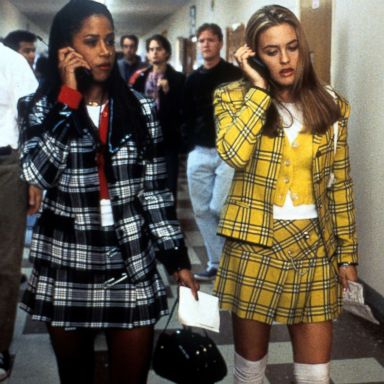
In Iggy Azalea's music video of 'Fancy' she used intertextual reference of the film clueless, a very popular film that was made by Amy Heckerling in 1995. The box office film was a surprise sleeper hit and after its success globally pre-teen and teen girls raced to shopping centres in search of plaid skirts and knee-high socks. Furthermore, intertextuality stemming from the film Clueless helps to grab at the teenage demographic yet again by using adaptations and reinterpretation of the already existing text to produce a new one that targets a more modern audience. 


Clueless' star, creator and costume designer on the making of the film and  its iconic fashion looks | GMA

Clueless (film) 1995


For instance, in this shot we can clearly see that the Mise-en-scene of the setting and costume of the characters in clueless, mirrors the artist in the video. Azalea herself is also representing the main character of the film as she is the lead vocalist in the song. Furthermore, the school setting and the iconic costumes of 'Cher' and 'Dionne' is re-represented in Azalea's video 'Fancy' to help reach the 'teen' demographic of young girls. This is because during the release of the film, high-school girls rushed to shopping centres to copy the stars outfits helping to advertise and create popularity of the film. Therefore, it can be argued that Azalea reinterpreted some of the famous motifs we recognise from the film e.g. costume to help establish herself as an artist and to reach to fan bases of the film in hopes that it will give her the same amount of recognition. Intertextuality here can be seen as successful as the song was uploaded onto YouTube in March 2014 and now has 998,208,601 views which may have not been reached without the intertextual references in the music video. Furthermore, the overall school setting helps to create a niche target audience as it is directed to teenage girls in schools, and the dress code of the artists in the music video reinforce ideas of the popular stereotype. 


Another example of intertextuality in Iggy Azalea's music video can be recognised by the mise-en-scene used in the film 'Clueless'. However, it can be argued that some intertextual references have been adapted to reach to a more modern audience. For instance, in the pictures above we can see the dramatic technical change in computers from 1995 to 2014 as there has been a technological advancement between both periods of time. It is important that some intertextual reference like this are changed to modern versions otherwise contemporary audiences would view it as outdated. Therefore it would also lack in reaching its target audience because the younger generations who use modern technology everyday wouldn't be able to relate to the main protagonists of the video. Furthermore, it wouldn't compete as well against rival music videos of the time of its release in 2014.  


Ariana Grande - Thank You, Next

Mean Girls Memory Lane         Mean Girls - 2004

Music video - 2018


Intertextuality can be found in the music video 'Thank you, next' by Ariana Grande, the video relies mainly on the millennial nostalgia of four teen rom-coms: 'Mean Girls', 'Bring it on', '13 Going On 30' and 'Legally Blonde', the intertextuality of the films helps to reach to teen/ early adult audiences by using this sense of nostalgia. 'Thank You, Next' uses references most heavily from 'Mean Girls' and the mise-en-scene of props, setting, costume and styling helps audiences to denote what the message of the music video is. 
Furthermore, the music video digs deeper into the roles of the main characters as we see Jonathan Bennett and Stephanie Drummond, original 'Mean Girls' cast members, reprise their roles. The music video recreates multiple sequences from the movie, including the Christmas pageant, the hallway scenes, the “Burn Book” and a sequence where high school students talk directly to camera about their experiences with McAdams’ character. This would off created a buzz for the fans of the films who are predominately teen/early adult audiences as the reshoot of adapted scenes from both mean girls and legally blonde would have thrilled the fandom base and also created an immediate popularity for the singer helping the song rise through the charts, making the hit a success. 
The music video can also be considered as intertextually linked with the children's show Victorious, the Nickelodeon sitcom where Grande got her start, as it features several of its cast members, including Elizabeth Gillies, Danielle Monet and Matt Bennett. The Nickelodeon shows target audience are also age related to these popular teen rom-coms when growing up, creating even more nostalgia and therefore interest into watching the video.
 
Conclusion 
Overall, from analysing the two music videos I have learnt that intertextuality is important to grab the attention from specific target audiences as it creates nostalgia. However, I have also learnt the importance of making intertextual links more modernised as it is vital to reflect the society of today, otherwise it can be seen as boring or outdated. Many audiences would mistake the music video with something of low production value too if it was to include older models of mine-en-scene to replicate a message. 


Media Language and Representation
In this media task I am going to be exploring the media language and representations in two different music videos. These chosen music videos will help me in my chosen brief and assist me in making representations clear in my own music video boosting its success. 

Music Video 1 - Just a Girl by No Doubt
How are combinations of media language elements used to create meaning and construct representations that address and appeal to an intended audience? 
One way that media language elements construct meaning through its representations in 'Just A Girl' and appeal to an intended target audience, is by reflecting the gender standards of the time through its use of mise-en-scene. 

For example, in the music video overall, it uses multiple shots to represent different things. However, the full shot here helps to decode the message of the song as it visibly shows what the band are protesting about. For instance, the shot shows us a kind looking suburban house that has a pretty lawn with flowers. But on the other hand, this contrasts against the damaged car that the leading vocalist 'Gwen Stefani' is standing in-front of. The institution encodes the stereotypical 'blonde' girl that can be represented in films like 'Clueless', 'White Chicks' and 'Aquamarine' as a start. This consists of mostly attractive blondes that tend to rely on their appearances rather than their intelligence to help make their way through life or their problems and nearly all of them are represented as 'dumb'. Therefore these institutions have helped to represent Gwen Stefani in this way which is reflected by their choice of mise-en-scene. For example, she has platinum blonde hair and is wearing a Chanel crop top creating the representation that expensive clothing and appearance matters a lot to her. It also sexualises her, reinforcing the idea that she is a typical 'girly girl' who is into expensive and trendy fashion. Hence why she isn't phased by her crashed car as her facial expressions present her as a girl who lives a careless and reckless lifestyle, this representation further showcases the typical genre stereotype of men being the breadwinners whilst young girls are taught to be "all pretty and petite" in order to marry well into money therefore she isn't phased by the financial loss as it isn't classed as her problem. The crashed car also represents the idea that she's 'clumsy' and 'stupid', which can be mirrored by her posture/stance as her feet are pointed inwards towards each other, creating the representation of her being 'clueless' as she's 'Just a Girl'. 
On the other hand, it can be argued that these representations are solely used to protest against what women face in everyday life based on their gender. The baggy joggers and boots countertype against the typical 'blonde girl' that has been established by media institutions and reflected in society. The Music video helps to demonstrate a more realistic girl, showing that she is capable of being both feminine and masculine which further reflects the lyrics in the song. This can be seen when she says "So don't let me have any rights"..."Oh, I'm just a girl, take a good look at me Just your typical prototype". 


Lastly, the use of editing and camera work helps to encode the differences between both women and men by showing the differences in femininity and masculinity. For example, the split screen between both the mens and women's bathrooms is presented through a tracking shot. This enables audiences to understand the clear differences decoded in the shot. The mens bathroom has a colour palette of black, white and grey and unlike the women's bathroom has no bright flowers, decorations, mirrors, cleanliness or in general colour. The clear differences in mise-en-scene represent the generic conventions related to femininity and masculinity that 'No Doubt' are trying to brake. The frequent cuts in editing between the women's bathroom and the men's are used to show the contrasts between both genders and therefore protest against the divide that women are concerned only about their appearance and men being concerned to look like like the 'macho man' as the harsh use of colours like black, white and grey reinforce this idea. 
Later in the video, it cuts to both men and women in the same bathroom to represent the idea that your sex doesn't determine what gender are and that you can be both feminine and masculine;.

Michael Jackson - Black Or White
One way that media language elements construct meaning through its representations in 'Black or White'  to appeal to an intended target audience, is by reflecting the social issues of the time through its use of mise-en-scene. Furthermore, they also construct traditional conventions to represent multiple cultures to appeal to a wide range of audiences. 


For example, in the music video it encodes multiple media messages to represent the positive changes that are occurring in society. The performative genre piece uses mise-en-scene to demonstrate the different types of cultures and societies around the world. For instance, the traditional looking Indian girl who is wearing culturally associated clothes, accessories and makeup, including a 'bindi' can easily be decoded by audiences that she is a traditional Indian women. It is also noticeable that she stands out against the city setting that she is in with Micheal, and that his outfit reflects men in a city environment. 
 For instance, he is wearing a casual shirt, vest and black trousers, which can be similar to a working mans business or work clothes in western society.  The fast moving cars going past them and the backdrop of a factory setting further represents the idea that they are in a busy city, like New York or London. This has directly been encoded by the producer of the video as they are protesting against how there is inequality between people based on their race, gender and ethnicity. The music video produced in 1991 reflects this inequality as it was known that many black working class people were of the labour force and earned their livings in factories. Western society was then and still is mostly run by white patriarchal men and therefore this keeps the unjust divide of races as black people are kept at the lower chain in the hierarchy working blue collar jobs instead of white collar jobs.  The main body of the video of "Black or White" reflects the song's lyrical plea for racial and cultural unity, as Micheal Jackson sings lyrics like "But, if you're thinkin' about my baby it don't matter if you're black or white". 


Furthermore, the combination of camerawork and editing in the music video of "Black or White" helps to exaggerate the media messages constructed by the institution. Moreover, it also helps to construct meaning making it easy for audiences to decode its representations. One example of this is shown nearer the end of the music video (5.27 onwards) where multiple people of different genders, ethnicities and races are singing the lyrics to "Black or White". The camera angles of medium close ups between each person makes it visually distinctive to audiences that there are clear divides between their genders, cultures and races, representing the message that "it don't matter if you're black or white". In addition to this the editing used where the individuals are morphed into one another further represents the idea that despite everyones individual physical differences we are all one. Representing the issue that Michael Jackson is protesting against as he wants there to be more equality between people all over the world. 

No Doubt's website : https://www.nodoubt.com


No Doubts website is quite simplistic in terms of its navigation and layout which can be seen as beneficial as nothing is too complex to access or understand meaning it can be easily used by older generations. Alternatively, it could be argued that the lack of text used on the website may be intended that they were trying to make the website as understandable as possible to people around the world. On the home page of the website we are welcomed to a mostly black and white page where there is a slide show of pictures of the band in black and white. The bands name however of "No Doubt' is centred at the top of the page in the colour yellow which contrasts against the mostly black and white home screen. The colour yellow encodes the idea of enlightenment, positivity and energy as it's usually a colour that is symbolic of the sun. The band reflect these traits well as some of their music protests against the negativity that we see today in modern society (for example, 'Just A Girl'). However, it could be argued that the use of the colour could also reflect the bands most negative aspects as sometimes 'yellow' is used to represent ideas of deceit and jealousy, possibly referencing to their split where Gwen Stefani left for a solo career. Furthermore, the mise-en-scene in the photographed pictures of 'No Doubt' reflect their pop funk/ rock band image as they are wearing combination of leather jackets and checkered outfits mirroring the traditional stereotypes we see in most bands. In addition to this we also see that they each have bleached platinum blonde hair with one of the band members styling a mullet also representing the clear conventions we see in most funk/rock bands. 
The other contrasting colour on the home screen is the use of pink which is used on all of the social media icons to make them stand out. They are also centred at the top left of the page encouraging people to click them in order to get audiences to follow the bands different online platforms, this way they will be able to get a higher reach when posting updates on news like potential tour dates etc.
Moreover, if you scroll down on the screen you see the bands latest news and also a box where you can subscribe to get email updates from 'No Doubt', 'IGA' and 'Universal Music Group'. At the top of the 'Home' page also there are multiple icons you can click. For example, the 'News' icon takes you to bands latests news, underneath these posts they are also attached to social media platforms enabling users to share No Doubts latest posts. The 'Band' icon takes you to a page where it shows the bands biography, they also have posted a fan question and answer (Q&A) giving fan bases an exclusive insight on their individual and collective experiences as a group. The 'Events' icon shows you when the band released new music, went to award ceremonies and lists all their tour dates. The 'Music' icon takes you to a page that displays all their albums and songs and where they can be streamed, for instance, Spotify, Apple Music, Amazon and google play. Furthermore, the 'Video' icon takes you to a separate page and onto their YouTube channel, which features all of their music and music videos. They also have a 'Photo' icon where fans can see band photos and are able to repost and share these to other social media platforms and lastly they have a 'Store' icon where consumers are taken to "No Doubt's Official Store". Here again we are introduced to a home screen with the same 4 colours we see on the official website of black, white, pink and yellow. Fans are able to purchase official 'No Doubt' merchandise like clothes, accessories and shoes. The items sold reflect the rock/funk genre style of the band as the military jacket can be expected to be worn by any of the band members therefore reflecting their image. 

conclusion
In conclusion, the research I have conducted has helped me with deciding what media language to include in creating representations and meaning in my music video. For example, I am going to use similar camera and editing work to Michael Jacksons "Black or White" video to represent the positive message that despite our racial, cultural and ethnical differences that we are all one and we all deserve to be treated equally. Therefore, as the brief states, this will help to engage and educate younger audiences as it will be a modernised version of what has been used successfully before. 


Media Theory Research
In this post I'm going to be looking at how a range of media theories can be applied to music videos and how audiences react and consume this, by annotating how some media theories are used to create a successful music video I will then judge which media theory I will use in my own project to create an entertaining and engaging music video. 

How is media theory used in 2 media products and how these make the text appealing to an intended audience? Select two media products and highlight how media theories are being used


Taylor Swift - You Belong With Me
One way that media theories are used to make a media text appealing can be found in the music video of 'You Belong To Me' by Taylor Swift. For example, it can be argued that the the genre theory established by Neale can be seen multiple times throughout the video to help create representations and meanings to its intended audience. The genre theory is about what genres are, and about how and why they are created. Neale argued that genres are made up of repetition and difference, repetition is shown in conventional elements like how the colours of red and black and the night sky are typical elements found in horror genres. Audiences find these easy to recognise, however, audiences like difference also it makes a project/film more original and engaging. 


In the music video 'You Belong With Me' it outlines multiple generic codes and conventions that can be recognised in a teen genre. For example, we are represented to the stereotypical cheerleader and as an audience we expect them to follow their typical antagonist role, they showcase attributes of being the most pretty, powerful and popular girl of the school. Often times they tend to be the 'villain' and only care for their appearance and having the 'hottest' boyfriends. These boyfriends are most stereotypically the good looking, charming 'Jocks'. However, most times they tend to fall for the most popular and best looking girls of the school, they are also mostly represented as bullies and have a male dominant behaviour asserting their power on the 'nobody's' around school/ local town. Most protagonists in a teens genre are either the 'new girl' or 'new boy', stereotypically they differ from everyone else in their age group but somehow manage to break the conventional stereotypes of people within their school (e.g. break barriers between groups like the conventional 'nerds', 'populars', 'skaters' and 'Emo's'). They often fall under the category of the typical 'nerd' who wears geeky glasses, shirt and tie or a sweater and most importantly finds it difficult to talk to members of the opposite sex. These conventions can easily be found in Taylor Swifts 'You Belong To Me' music video as the commonly used representations used over time help us as an audience to easily distinguish the storyline. However, as Neale suggests, difference can also be found in the music video to help make the story 'different' and new for the audience helping to keep the storyline intriguing. For example, the stereotypical 'Jock' who is dating the pretty 'popular' girl of the school breaks these stereotypes as he instead falls for the 'nerdy', 'new girl'. The change in plot would be view as shocking by audiences but also as a positive one as they are both portrayed as good and kind characters unlike the stereotypical 'popular cheerleader' therefore their establishing relationship would be accepted by audiences.  


Another way media theories are used in media texts are to help protest against real world problems and share the importance of actively protesting against issues within the media. For example, theorists like bell hook's and Butler support the ideas of how gender is presented in the media. In P!nk's music video of 'Stupid Girl's' it protests against the generic conventions and codes that are portrayed by women in the media and in every day life. Butler states that Gender is a social construct and it is reflected in how you feel and how you behave. He also suggests that performing certain 'rituals' and 'routines' makes you feel either more feminine or more masculine, therefore your identity is constructed by your own actions which tend to reflect those of what the media teaches us. 


For example, in P!nk's music video of 'Stupid Girl's' she represents the stereotypical girl of the era who conforms to the medias representations of what a young, attractive girl should look like and be. For instance, this consists of being tanned, blonde, 'stupid'/clumsy, marrying a rich, good-looking man and being submissive in the household. These feminine stereotypes are represented in the media as models, reality stars and film stars tend to follow or 'act' out these rituals in their work therefore sending the message to audiences that girls should act and look a certain way in order to be deemed attractive by society overall. However, P!nk is trying to protests against Butler's theory of gender performity as she also portrays a character that is feminine but doesn't follow the social construction of what a girl should be. For example, the fact that she is playing American football and campaigning as a president suggests that sports and intellect isn't something that is tied to just men and neither is keeping up appearance and dressing nice targeted towards just women, she argues that both men and women can have qualities of both. 

conclusion
Overall, after looking at both the music videos of Taylor Swifts "You Belong To Me" and P!nks "Stupid Girls"it is clear that both theories represented help to demonstrate a further meaning. One media theory I would use in my Music Video is Gilroy's Post-colonialist theory where he believes we can still see the effects of colonialism in the media now. For example, a divide can be seen between racial and ethnic groups through products, ethnic minorities are often shown as weak and powerless and therefore are usually marginalised by being classed as "other'. He believes western white men in particular are often shown as more powerful, successful and hold more authority/control, this idea can be found as true as they often dominate media.
This theory targets the inequalities between ethnic and racial groups which reflects the main topic my music video is protesting about as it is based on the protest of "Black Lives Matter" which according to New York Times "May Be the Largest Movement in U.S. History". 


Institutional Research

In this post I will be researching the media institution of Warner Music Group linked in my chosen brief. I will be paying particular attention to the type of company they are and the type of media products they produce.  I will also be looking into how the company ethos is reflected in their products, this will give me a idea on how I can incorporate this into my own production of both the main task and the website. I think by understanding the institution linked to my chosen brief, it will enable me to produce a media text that follows and reflects their style, ideologies and ethos more effectively. 


 Warner Bros. Records was founded in March 1958 as an arm of Warner Bros. Pictures, whose “shield” logo was adopted by the fledgling label and has been used by the company ever since. In 2004, when Warner Music Group was sold by Time Warner and became the world’s largest independent major music company, it was agreed that Warner Bros. Records would continue to use the Warner Bros. name and logo for 15 years. However, Warner Records has unveiled a bold new logo, with an artful simplicity and impactful typography that are ideally suited to the digital world. The circular icon – suggesting a record, a sun, and a globe - is a nod to the label’s past, present, and future. The openness of the design gives it the flexibility to embrace all Warner Records artists and all genres of music around the world.The new approach helps the message of 'a protest music video' fit together with the company more collaboratively. Therefore, it will be useful that I incorporate establishing ideas in my music video, representing a forward moving society.


Furthermore, Warner Music Group owns labels such as Flagship labels, Atlantic Records Group, Elektra Music Group, Warner Records, Parlophone Label Group, Rhino Entertainment and more. 'Access Industries' is the Parent organisation of Warner Music Group and Stephan Cooper is the current CEO as issued in August 2011, replacing Edgar Bronfman. 

It is an American multinational entertainment and record label conglomerate headquartered in New York City. It is one of the "big three" recording companies and the third largest in the global music industry, after Universal Music Group and Sony Music Entertainment. Warner Music is the rights-holder of all music released on its label, and the company pays royalties to artists when their music is streamed online, bought digitally or physically, or used in films or commercials. Each revenue stream is growing, primarily due to the increased penetration of digital distribution. In 2019 the group made 4.475 billion US dollars in revenue, reflecting why they hold so much power and dominance over the music Industry.


Conclusion:

Overall, I have found within my research that Warner Music group is a well established music label, that has a powerful dominance over the music industry.  Therefore, it is important that I incorporate high production values in both my website and video to maintain the high and professional standard that Warner Music Group sets. Furthermore, the additional new logo represents a forward moving society therefore my protest music video should integrate modern society issues. For example, one way I will represent this is by using a diverse cast to reflect the 'Black Lives Matter' movement, I will further solidify the importance of this by using a narrative genre of story telling, representing the life of a black person in contemporary society. 


Producers/Directors Research

In this post I will be researching a range of media practitioners linked to my chosen brief, paying particular attention to the style and use of conventions in the type of media products they produce.  I will also be making reference to some of their existing products, this will give me a ideas on how I can gain inspiration from their techniques and for my own productions of both the main task and the website. I think by understanding the practitioners linked to my chosen brief, it will enable me to produce a media text that follows and reflects their style more effectively.

research of 3 directors/producers for music videos: 

Melina Matsoukas - 

Is an American music video, film, commercial and television director. Most of her work is described as unique as she attempts to include a multicultural point of view in all of her work. She represents a point of view that flips existing narratives and normalises the inclusion of women and minority ethnic groups in spaces and projects where they were not previously represented. 

For example, her beliefs can be represented in the music video “Formation” in which she co-directed with Beyonce. The video was Inspired by the aftermath of Hurricane Katrina, and has underlying themes of black agency with the overarching message of hope in the face of traumatic histories. This led her to become the first director to win a music Grand Prix at the Cannes Lions. Beyond that, it won six MTV VMA awards, including Video of the Year, as well as the award for Best Music Video at the 2017 Grammys. The video became a powerful rallying message for black people as they faced a divided country with mass struggle.

She has also worked with some of the biggest names in entertainment. She has previously directed projects for Jay Z, Lady Gaga, Snoop Dogg, Solange, Pharrell and Rihanna, for whom she directed the MTV Best Video Award-winning visuals for “We Found Love.” Melina was the first solo female director to receive an MTV award in the Best Video category, and later went on to also win a Grammy for best long-format video for “We Found Love.”

Similarities can be found in both "We Found Love" by Rhianna and "Formation" by Beyonce. For example, the use of non diegetic speech in both reflects the narrative genre as it sets the tone for what the music video is trying to represent. For instance, in the 'We Found Love' music video it represents a broken relationship whereas the 'Formation' video reflects the empowerment that is being portrayed throughout. Both Music videos also include a diverse cast with the inclusion of ethnic minorities. 'Formation' is mostly female dominated further mirroring the morals of Matsoukas as she attempts to include a multicultural point of view to portray a realistic American society and the inclusion of women to normalise women presence/empowerment in all industries. The use of setting in 'Formation' is also an interesting concept as New Orleans is a place known for its multi-culture such as its inclusion of Cajun, Creole, French, Spanish, German, Latino, Irish and African backgrounds.

Hype williams: 


Harold "HypeWilliams is an American music video director, film director, film producer, and screenwriter. He is known for his work on music videos, receiving awards such as the MTV Video Music Award in the Best Rap Video category for Will Smith's "Gettin' Jiggy wit It", MTV Video Music Award for Best Group Video for TLC's "No Scrubs", and the BET Award for Best Director for Kanye West's "Gold Digger". 
In 2006, Williams was also honoured by MTV with its Michael Jackson Video Vanguard Award, presented in honour of his achievements as a filmmaker.

A signature style used by Williams throughout the vast majority of his videos was the use of the Fisheye lens, which distorted the camera view around the central focus. This was used in the music video "The Rain (Supa Dupa Fly)" by Missy Elliott for example; however, it was dropped by 2003, when he experienced his lowest level of production activity since beginning his career as a music video director. Since 2003 however,  Williams then adapted a new signature image, combining a centre camera focus on an artist's or actor's body. Combined with a solid colour background with a centred spotlight to create an illusion. In addition to this, he frequently utilises aerial and tracking shots which often move backwards or forwards. 

 Williams has produced a variety of successful music videos along with songs such as "No Scrubs" by TLC. Throughout most of his work he uses similar motifs between each videos. For example, his work can be recognisable by the repetition of backdrops and lighting with a brighter light centred in the middle. In a variety of his music videos he also uses abstract editing, camera work and lighting making it easy to decode his work. It can be argued that he creates a genre style of his own as it doesn't follow the usual expectations of music videos of the time. Some of his pieces follow a narrative or a performative genre, however it is also noticeable that his different style in directing created popularity as it pushed the boundaries of a stereotypical music video. Overall representing his work of the time as successful and liked among a wide range of audiences. 

Michel Gondry


Michel Gondry is a French director, screenwriter, and producer noted for his inventive visual style and distinctive manipulation of mise en scène. His career in directing/producing music videos started in 1988 when he directed a video for the band 'Oui Oui'. Gondry's initial success stemmed from here as he was noticed by the music artist 'Björk', who then asked him to direct the video for her song "Human Behaviour", after this he has been making music videos ever since with his latest video of  "Model Village" by the IDLES dating 2020. Michel Gondry is a director that clearly has little interest in the financial gain of cinema, and more importantly, uses his creative nature to produce a variety of interesting works. His early works on music videos tended to include animation and gave Gondry the opportunity to experiment with different techniques. His success led to opportunities in creating videos for a range of high-profile bands including the Foo Fighters and Daft Punk. Each of these videos allowed Gondry to investigate different techniques that he would later use as he branched out into film making. 

A signature feature used widely by Gondry in all his work is that he generally creates drama with splashes of comedy and fantasy. His films are typically centred around people’s mindset towards a situation, with the audience able to see into the characters thoughts by using a combination of live action and animation.

Furthermore, Gondry's vision and career began with his emphasis on emotion. Much of his inspiration, he says, came from the film 'Le voyage en ballon'. He stated: "When I watch this movie, I dream I'm flying and then I do stories where people are flying. I think it's directly influencing." It can be argued that this is a direct influence towards Gondry's music video for "Music Sounds Better With You" by Stardust as the narrative is based around a young boy flying a plane. The child/viewer relationship may create feelings of nostalgia for those watching, therefore implying that Gondry uses emotion in his work to approach wide ranges of audiences. 

Conclusion:

Overall, after researching the 3 music video producers/directors I have learnt the importance of personal style. For example, one similarity that all the directors/producers share is that they all use their own establishing beliefs, styles and methods to construct a music video. One reason why this is significant is because bringing forward new ideas, methods or art into Music Video's can be recognised on a global scale. These establishing creative methods formed by upcoming producers or directors help to get them recognised by other artists or producers, directors and writers. 
One way I will approach this is by sharing my own personal beliefs within the music video but I will also make the message relatable to a large scale audience also. For example, I am strong believer and advocate for the Black Lives Matter movement however I am not of black heritage, therefore it is important that I use a diverse cast to discuss some of the vulnerable topics that they may have faced during their lifetime to use in my Music Video. This will then hopefully portray a true representation of the issues that are still ongoing in modern society around the world and raise awareness/support from a wide range of audiences. Furthermore, I will reflect these beliefs through the use of Mise-En-Scene, camera work, lighting and choreography to reflect the inequality between those of race. Such as using a tilted downward shot to reflect how society looks down on Black citizens due to their ethnic and racial backgrounds. 


Comments

Popular posts from this blog

ONLINE CROSS MEDIA PRODUCT - WEBSITE

Website Link  -  https://connieschofield24.wixsite.com/wonder Intended evidence: Video element:  Below you will find examples of what I wanted to include in the video element of the website: Intertextuality : part of my intention with the home page was to include an element of intertextuality that linked to the messages of the Black Lives Matter movement for both production and online. For example, the inclusion of the BLM fist on the website promotes the support to the movement. Furthermore, the convergence of the linked page makes it easier to sign petitions and learn of the movement without having to go and research pages yourself, therefore this makes it more easily accessible for all audiences ages. However, I would have liked to have made a template of my own alike the band logo/album, but couldn't get access to the technology or help I needed to help me achieve this.  Convergence : As well as the inclusion of a linked website to...

NEA Planning part 2 mood board

My Mood Board The NEA brief that I have chosen is Music Videos and Online which consists of producing a three minute music video for a fictional band/artist that are signed to Warner Music Group  and  two pages of a working website   for the band/artist . At minimum the brief also requires me to include a statement of intent to summarise my music video and how the content  I  have produced is age  appropriate  to a socially  conscious  16-25 middle to upmarket demographic. Throughout my video it is important that  I  also use a range of camera shots, angles and movements, editing, use of mise-en-scene,  characters  with different genders, races and  ethnicities and a clear sense of branding across both elements of the cross-media products. The NEA brief further requires a web page to promote the band/artist, at minimum it employs that the page must include original audio or audio vis...

NEA Planning Part 6 - Schedule

  NEA Planning Part 6 - Schedule TASK 1 -  Create a calendar that highlights your chosen production/photography/filming dates and activities.  TASK 2 - Why do you think it's important to produce a schedule of activities when working on a production? Name 3 activities you're likely to struggle with? What are you going to do in order to achieve these difficult activities?  One reason why I think it's important to produce a schedule of activities when working on a production is to make sure that you stay on time. For example, it will enable me to make sure that my coursework is handed in on time and up to the standard I would like it to be at. Another important factor of a schedule is to help plan convenient times for cast members and myself so it can be done as efficiently as possible.  One activity I am likely to struggle with is incorporating titles and graphics to my music video. This is because I hope to u...